
The culture of Japanese umbrellas in Gifu, nurtured alongside the flow of the Nagara River. Mikiko Kawai, a Japanese umbrella artisan, has been familiar with these umbrellas since childhood and carries on this culture with unwavering resolve. The Japanese umbrellas she crafts radiate a beauty that gently accompanies daily life, with meticulous attention paid to every detail, from their appearance when closed to their texture. The challenges of reviving it as a local industry, nurturing successors, and the sentiment embodied in her shop name, “Kasabiyori”. We wish to listen closely to the quiet passion driving her ongoing journey to connect tradition with the future.
Q: Ms Kawai, you were born into the family of the long-established Japanese umbrella wholesaler “Sakaida Eikichi Ten”, and had contact with Japanese umbrellas from a young age, I understand. What impression did you have of them back then?
Until I was in primary school, I visited my mother’s family’s umbrella shop every Saturday. So, for me at the time, Japanese umbrellas weren’t something special; they were just part of everyday life. It felt like any other livelihood, much like if my family ran a coffee shop or farmed. During summer and winter holidays, I’d go to the shop every day. Sitting right beside my grandmother as she worked, I’d draw on scraps of washi paper or do my homework while watching her movements.
Q: I understand there were many other craftsmen besides your grandmother.
Just the craftsmen who came to the shop daily numbered three or four. Back then, it was a completely specialised division of labour, and there were also numerous craftsmen working externally. The process of making Japanese umbrellas is divided into such detailed steps that each required its own specialist craftsman. The number of people involved was far beyond what a child like me could ever count.
Q: I understand you entered the workforce and took a different job initially. What prompted you to return to the world of Japanese umbrellas?
At first, I worked at an advertising agency handling the production of insert leaflets. However, the final pre-printing tasks often ran until 2 or 3 in the morning, week after week. I began to feel, ‘I can’t keep working like this for long…’ So I returned to Gifu and used my bookkeeping qualifications to work in accounting at an accountant’s office. Around the age of 27, my uncle, who ran a Japanese umbrella shop, asked me, ‘We’re short-staffed, could you help out?’ Joining my uncle’s company was what led me to step fully into the world of Japanese umbrellas.
Q: What did you feel when you completed your first Japanese umbrella with your own hands?
When I finished one umbrella almost entirely by myself, from start to finish, I felt a surge of emotion. It hit me: ‘Ah, I’ve truly entered this path.’ Until then, my work had mainly been auxiliary tasks; it felt like I was just helping out. Completing that one umbrella quietly signalled the beginning of my journey as a craftsman – the realisation that ‘from now on, I will continue making these myself.’
Q: Why did you decide to learn how to make the entire umbrella yourself, when it was originally a division of labour?
When I joined my uncle’s company, some craftsmen responsible for specific parts of the division of labour had already left. For instance, the person handling this particular task was on sick leave, or that person was elderly and it was uncertain how much longer they could continue. There was a real sense of crisis that, if things continued like this, it would eventually become difficult to complete Japanese umbrellas. That’s precisely why I felt I had to learn the entire process myself first, regardless of whether I would actually handle every step myself later on.
Q: Could you briefly outline the process of making a Japanese umbrella?
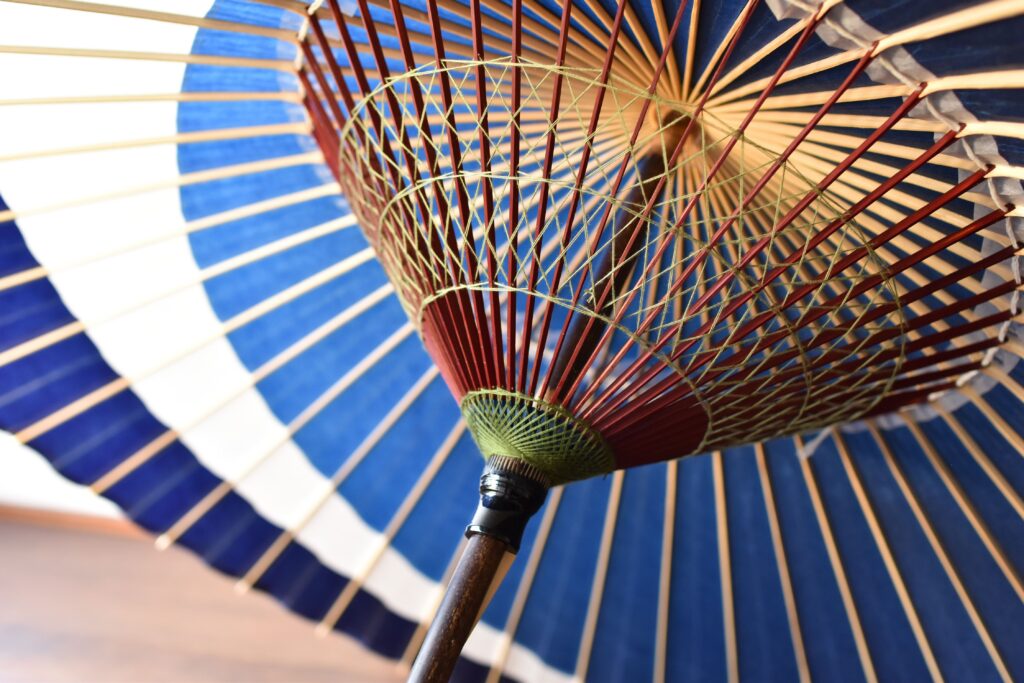
Japanese umbrella making begins with sourcing materials. Components like the ribs and the mechanism controlling opening and closing, known as the “kuri-komi”, are each handled by specialist craftsmen. Our work as umbrella makers starts when we receive these parts and begin assembly. We perform the “tamekake” process, which involves curving the ribs to achieve a beautiful silhouette when closed, then connect the kuri-komi to the ribs using thread. Next, we apply the Japanese paper in several stages. Once the paper is applied, we perform the “folding” process to create the creases that allow the umbrella to close neatly. For rain umbrellas, we then impregnate them with oil and sun-dry them. Sun umbrellas skip the oiling step and proceed directly to the finishing process. We apply multiple coats of lacquer over the ribs, and finally, we perform the “thread stitching” on the inner ribs, which serves both to reinforce and decorate the umbrella, completing the piece.
Q: When you first began working as a craftsman, which stage proved most challenging?
Rather than struggling with any single stage, I was bewildered by the “gap” between my memories and reality. As a child, the craftsmen’s movements seemed so swift and effortless. I assumed it couldn’t be that difficult. But when I tried it myself, it didn’t flow smoothly. Particularly, the craftsmen back then worked under a division of labour system, focusing solely on one task, so their movements were extraordinarily fast. It was a real struggle just to get close to the speed of those craftsmen from my memory.
Q: Which stage of the process do you find yourself most focused on nowadays?
The preparatory stage before applying the washi paper. It involves tasks like spreading the ribs evenly and straightening them to prepare the base. If the foundation isn’t solid, no matter how hard you try afterwards, the umbrella’s shape will collapse. The finishing lacquer also demands concentration. In Gifu, we describe Japanese umbrellas as “a flower when open, bamboo when closed”. The lacquer directly affects the appearance when closed, so if it bleeds or is botched, all the preceding work is ruined. That’s precisely why I approach it with utmost focus.
Q: What is your ideal vision for the “closed form” of a Japanese umbrella?
It should evoke the image of a single bamboo stalk – rounded yet possessing a dignified poise. If not finished well, it spreads out softly when closed, but when done beautifully, it achieves a crisp, taut feel. Crucially, the closed form must feel rounded to the touch. We strive for a smooth, slippery sensation when you take it in your hand and turn it. Since a Japanese umbrella spends more time closed than open, at our brand “Yorihiyori”, we place the utmost importance on the beauty of its closed form.
Q: Is there anything you particularly emphasise when selecting materials?
For washi paper, we source not only local Mino washi but also from various other production areas. Mino washi is of superb quality, but it has limited colour and pattern options. Therefore, we source patterned washi from other regions and thinner washi from yet others, selecting appropriately for each purpose. Our foremost criterion when choosing is thickness. If it’s too thick, the umbrella feels stiff when closed; if too thin, durability becomes an issue. The fundamental requirement is washi that is neither too thick nor too thin, yet robust.
Q: What are the distinctive features unique to Gifu’s traditional Japanese umbrellas?
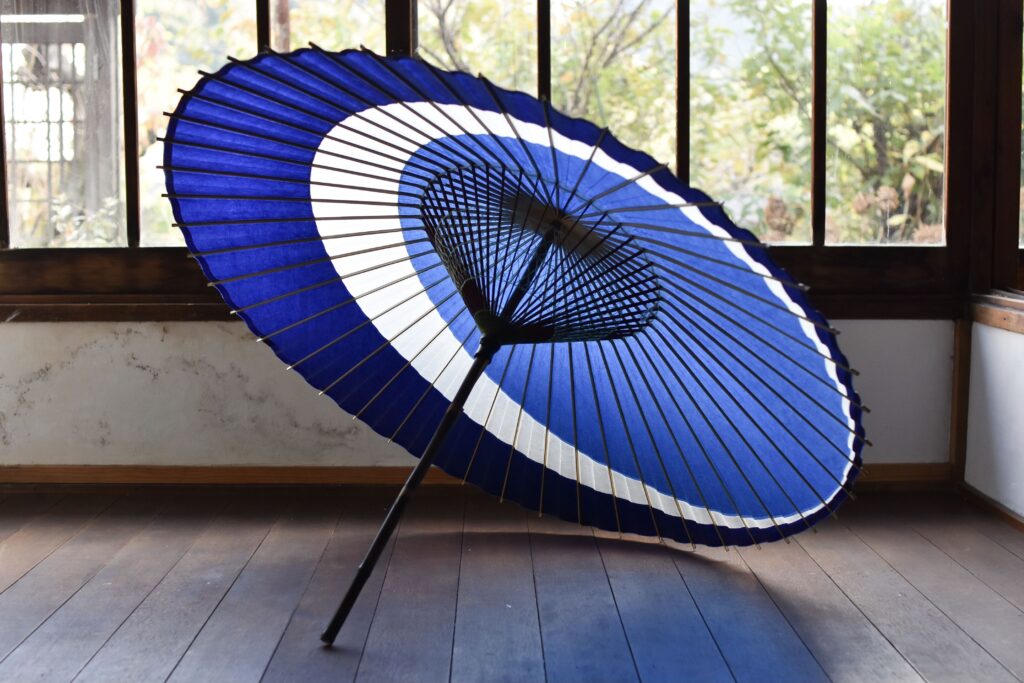
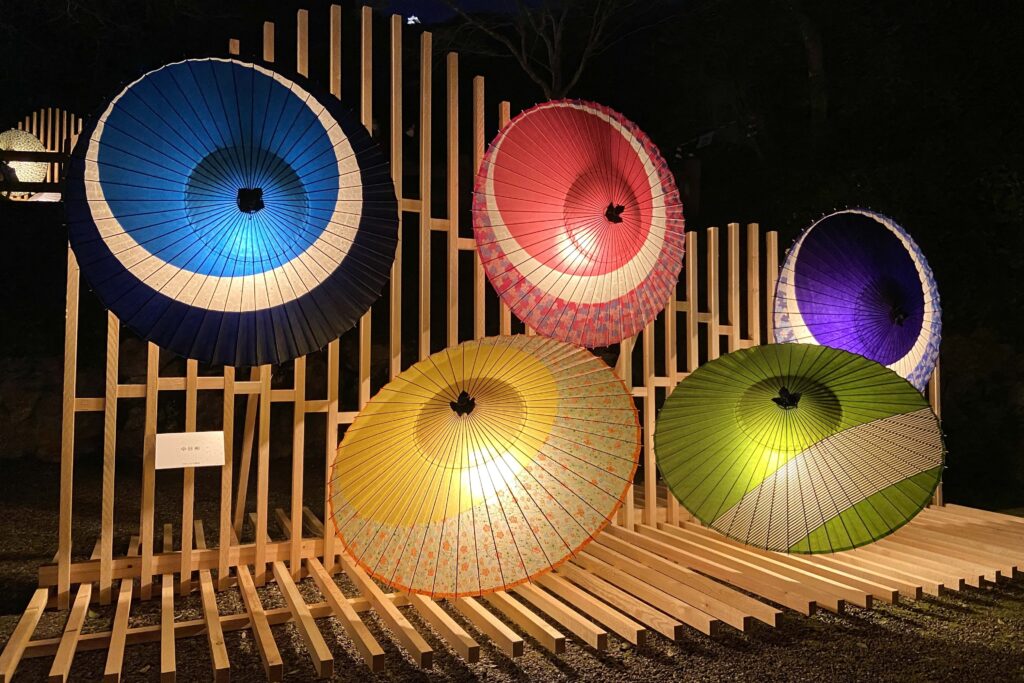
Both sun umbrellas and snake-eye umbrellas feature a slender silhouette as a characteristic of Gifu umbrellas. In regions with strong winds and heavy snow loads, the ribs need to be thickened for durability. However, since Gifu City isn’t a particularly heavy snowfall area, delicate snake-eye umbrellas were perfectly adequate. Another feature is the prevalence of intricately crafted designs, such as the “double-layered” sun umbrella. This involves applying two layers of washi paper, creating a layered effect when held up to the light.
Q: Are there regional differences in the thread stitching patterns?
It varies by region. Gifu tends towards simple lattice patterns, but some areas use three or four colours to create very luxurious finishes. Thread stitching is an area where regional characteristics are particularly pronounced.
Q: Could you tell us about how the culture of Japanese umbrellas spread in Gifu?
First, as a premise, the large Nagara River lies at the heart of the region. Along its banks lies Mino City, famous since ancient times for the Mino washi paper produced there. Furthermore, the surrounding area was rich in high-quality bamboo and timber, and the techniques for processing these materials were well developed. These materials were transported down the Nagara River to Gifu City, unloaded at the port town, and then distributed throughout the city. This led to a rapid flourishing of crafts using bamboo and washi paper, including Japanese umbrellas, lanterns, and water fans. Furthermore, during the Edo period, the feudal lord encouraged samurai to take up umbrella-making as a sideline, providing a further boost. This helped Japanese umbrella culture take deep root in Gifu City.
Q: What sentiment lies behind the brand name ‘仐日和’ (Kōbiyori), launched in such a Gifu?
When starting my sole proprietorship, I was pondering what to name the business. A senior colleague casually suggested, ‘How about Kōbiyori?’ The sound of ‘biyori’ (fine weather) felt pleasant, and we got excited discussing how wonderful it would be if every day were umbrella weather. We decided on that name straight away. ‘仐’ is an abbreviated form of ‘傘’ (umbrella), long used by traditional Japanese umbrella shops. It feels lighter than the standard “傘” character, which suited the brand name. While Japanese umbrellas are strongly associated with rain, we also focus on making parasols. Our wish is for every day, whether sunny or rainy, to be a ‘仐日和’ day.
Q: The Japanese umbrellas from “仐日和” are characterised by their modern designs that complement Western attire. How do you balance tradition and innovation?
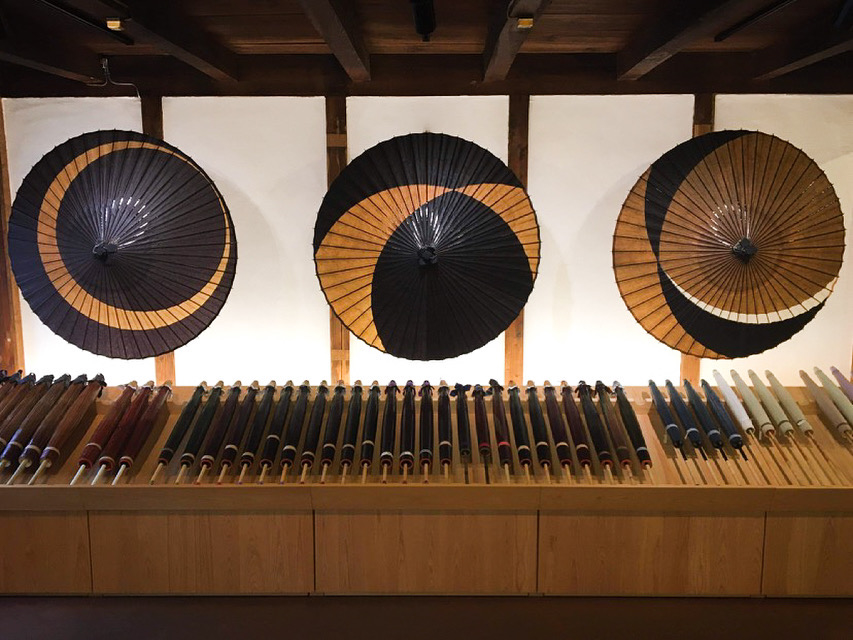
People sometimes describe the Japanese umbrellas I make as “new”, but that’s not quite accurate. During the Shōwa era’s heyday, Gifu City was teeming with Japanese umbrella shops fiercely competing in craftsmanship and design. The umbrellas made back then were far more innovative and technically advanced than what we see today. Some featured paintings of cranes or flowers when closed – designs so intricate it’s hard to imagine how they were made today. My motivation in crafting these umbrellas stems more from a desire to catch up, even slightly, with that golden age. So rather than “preserving tradition”, it feels closer to nostalgically rediscovering the modernity and elegance of Showa-era Japanese umbrellas that many haven’t yet encountered. It’s about striving to approach the skill of those who came before.
Q: Are your unique designs, like the cherry blossom shape or those for men, also adaptations of Showa-era Japanese umbrellas?
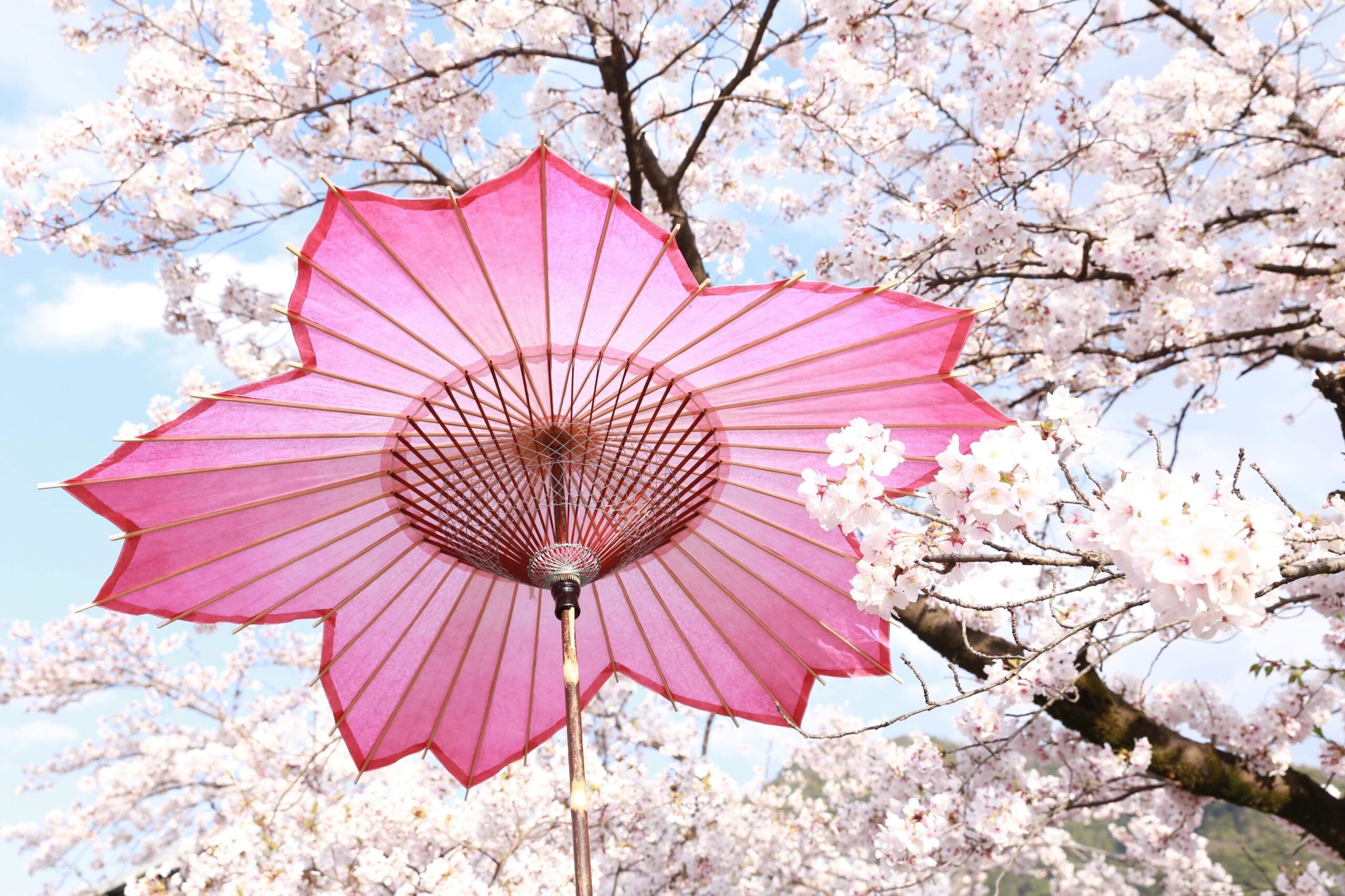
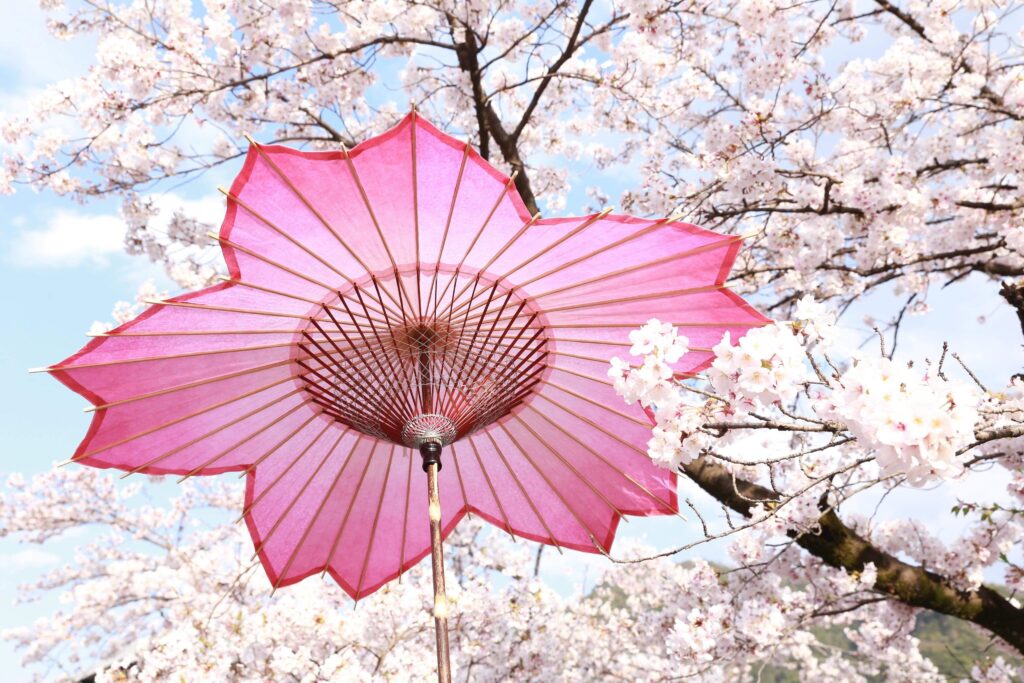
I knew cherry blossom-shaped umbrellas existed in the Shōwa era and had always wanted to make one. Then, a television station in the Tokai region commissioned me: ‘We wish to present a Japanese umbrella to the leading actress of the film “Mary Poppins” and require one original piece.’ The film materials they provided featured many cherry blossom motifs, which became the catalyst to realise my long-held concept. Regarding designs for men, from the very start of launching “Yorihiyori”, I wanted a lineup that transcended gender, age, and clothing style. Actually, I was quite surprised myself, but apparently, male customers have always made up the majority of purchasers in-store. Naturally, many buy them for themselves, but they’re also frequently requested as props for photography. I feel that our Japanese umbrellas, with their chic designs and subdued colours, have simply found their natural place.
Q: What constitutes a ‘beautiful Japanese umbrella’ for you personally?
My goal is to create an ‘umbrella with good posture’. When beautifully crafted, it takes on a straight, unwavering stance, as if standing tall with spine perfectly aligned. I strive for Japanese umbrellas that possess such dignified poise when closed.
Q: Through making Japanese umbrellas, have your personal values changed?
Upon entering the world of Japanese umbrellas, I was first struck by the harsh reality that the wages were far too low to sustain it as a chosen profession. I felt a strong sense of crisis that, continuing this way, it would be unsustainable and inevitably reliant on subsidies and donations. In a situation where one must sacrifice their livelihood to continue, only those who can afford to sacrifice their livelihood can engage in Japanese umbrella making. That is precisely why, when I decided to become independent, I made a firm resolution: ‘to create a situation where I can properly sustain myself by making Japanese umbrellas’ and ‘to make it viable as a business’. My ambition is not merely to preserve Japanese umbrellas as a “traditional craft”, but to re-establish them as a “local industry” in Gifu, as they were during the Showa era. To achieve this, I run “Yorihiyori” with the fundamental principle of paying my employees a proper wage, and ensuring I myself earn a proper income from umbrella-making.
Q: What activities or approaches are you currently undertaking to pass Japanese umbrellas on to the next generation?
Regarding the craftsmen for the ribs and components, we have successfully trained one of each over a three-year apprenticeship. The rib craftsman has already established his own business, and the component craftsman also began working in that field after his training. Naturally, we cannot rest assured as the next generation is still needed, but we have at least avoided a situation where there were no successors. Therefore, we are now shifting our focus to training craftsmen who can make the umbrellas themselves. We are shifting our efforts towards opening a Japanese umbrella school and workshop to increase the number of people who can actually make them.
Q: Could you elaborate on the philosophy that ‘Yorihiyori’ advocates, namely the desire to promote Japanese umbrellas as ‘everyday tools’?
Japanese umbrellas often carry the image of being ‘difficult to handle’ or ‘heavy’, which I think discourages many people from trying to use them. But actually, the barrier isn’t that high. Sun umbrellas require no maintenance, and rain umbrellas simply need airing after use. Personally, I’d like people to use them with the same appreciation as a “luxury item” – like listening to analogue records or deliberately grinding coffee beans and dripping them.
Q: Thank you. Finally, could you share a message for readers who’ve become interested in Japanese umbrellas after reading this article?
The colours and appearance from the outside of a Japanese umbrella are completely different from the view inside. It’s a privilege unique to those who carry one―colours, scenery, and even sounds visible only to the bearer. I truly hope you’ll take one in your hands and open it for yourself. You’ll surely discover the charm that Japanese umbrellas possess.
PROFILE
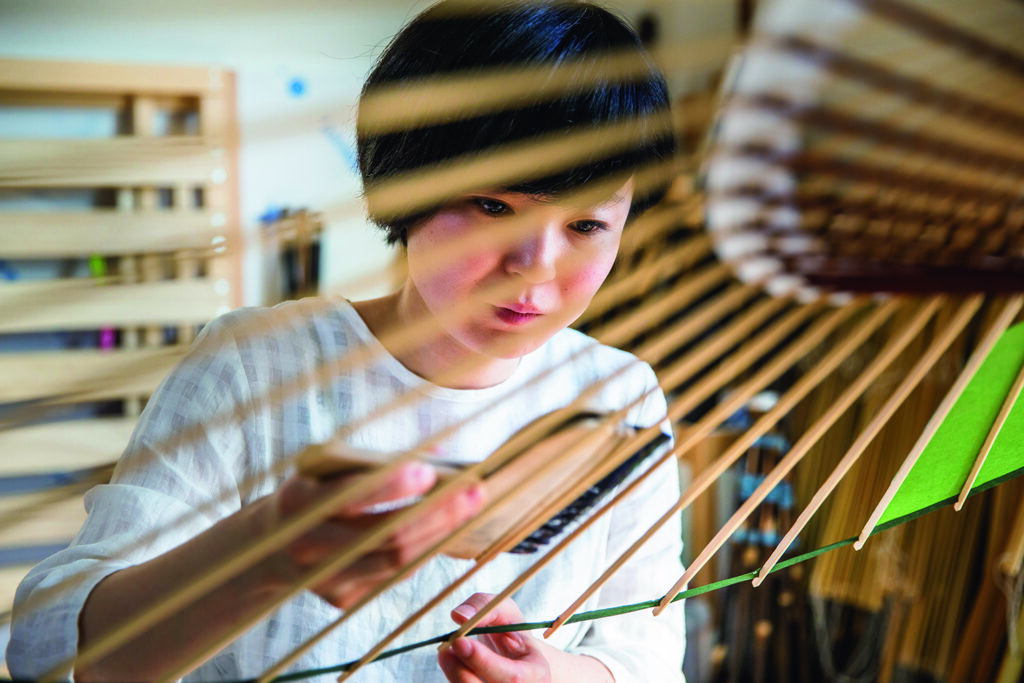
Japanese Umbrella Craftsman
Mikiko Kawai
Born in Gifu Prefecture, 1987. Her maternal family home is the long-established Japanese umbrella wholesaler ‘Sakaiya Eikichi Honten’ in the Kano district of Gifu City. She spent her childhood immersed in the everyday presence of Japanese umbrellas. Around 2015, prompted by her uncle, Mr Sakaiya Eiji, asking, ‘Why not try helping with making Japanese umbrellas?’, she embarked on the path of Japanese umbrella craftsmanship. In 2016, she launched her own brand, ‘Kasabiyori’.