
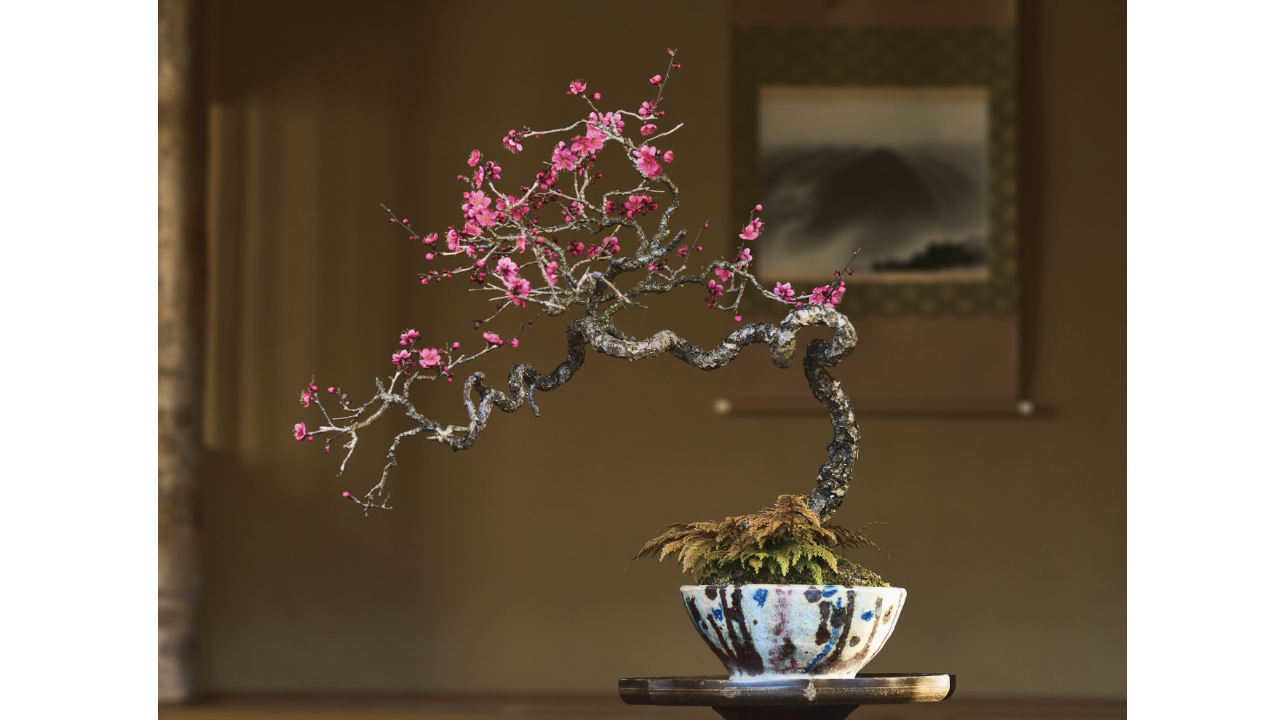
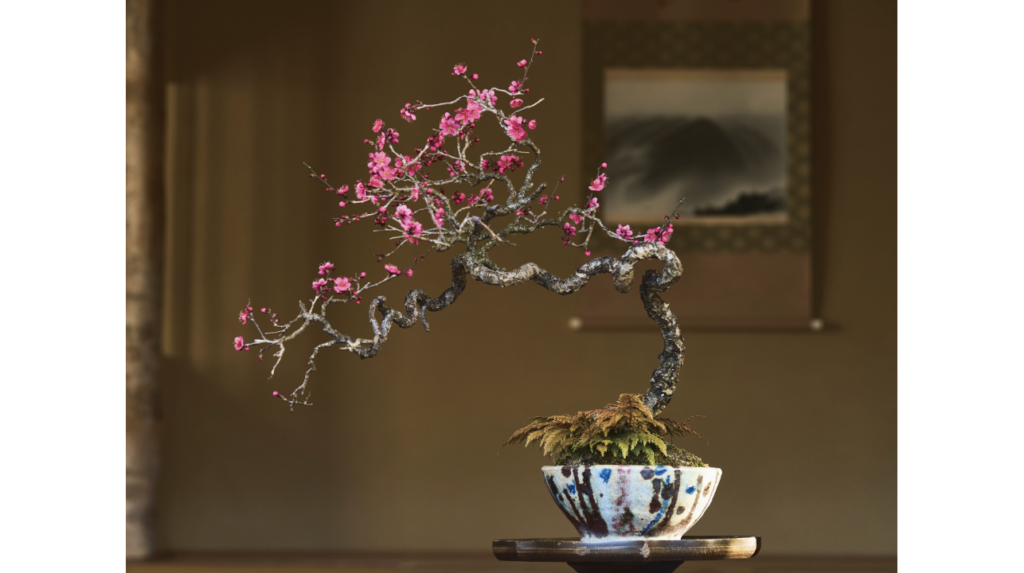
Seikōen is a long-established bonsai nursery with a history spanning over 100 years. As its fifth-generation owner, Kaori Yamada has grown up surrounded by bonsai since birth. Facing these ‘microcosms’—inherited from a century ago and to be passed on to the next—Yamada continues to question what beauty truly is and how tradition should be preserved. Even in an age where results and speed are often prioritised, bonsai moves in harmony with the seasons, transforming its form slowly over time. As she continues to engage with this passage of time, what is Yamada thinking now, and what future does she envisage?
Q.Ms Yamada, you were raised in a family that runs ‘Seikouen’, a long-established bonsai nursery with a history of over 100 years. What did bonsai mean to you when you were young?
It was always right there beside me from the moment I was born, so I never thought of it as anything ‘special’. To use an analogy, it felt much like eating plain rice every day. Rather than consciously engaging with it, I would simply find myself touching it before I realised. A landscape featuring bonsai was the norm; it blended naturally into my daily life.
Q.Could you tell us how you came to take over the family business as the fifth-generation owner?
As an only child, there was always an unspoken sense that I was the one destined to take over. During my teenage years, there were times when I wanted to escape it, but the turning point came when I visited France with my parents at the age of 18. Being exposed to a different culture allowed me to view bonsai from a broader perspective for the first time and realise that it, too, is a powerful part of Japanese culture. I studied marketing at university and had received a job offer as a systems engineer, but I felt I had a role to play in promoting the art. So, in the spring of my fourth year, I made the decision of my own accord to take over the family business.
Q.Did you have any inner conflict about taking over the family business?
To be honest, I was full of conflict. Ultimately, I was only able to make the decision because I managed to view it positively, but I was constantly wavering. The world of bonsai is, in many ways, a male-dominated society. I don’t think that has changed much, either then or now. In such a male-dominated industry, I had endless anxieties about how I would be perceived and whether I would be taken seriously. That is precisely why I turned my attention to a completely different world for a time, and why I felt such a strong desire to choose my own path in life. It was only after overcoming that conflict that the feeling, ‘I really do want to do bonsai after all,’ began to take root.
Q.In what moments do you feel the weight of your responsibility as the head of the school?
I believe responsibility is something one feels throughout one’s entire life. As long as I am creating something, I want to continue creating beautiful things. I think that is the essence of it. Rather than feeling a sense of responsibility simply because I have inherited this tradition, I am constantly aware that, as long as the creations born from my hands are presented to the world, I must never compromise on their beauty. For me, it feels less like carrying a burden and more like being entrusted with something.
Q.Bonsai is often described as a ‘microcosm’. If you had to describe bonsai in a single word, Mr Yamada, what would it be?
In a word, it is an entity that harbours a sense of romance. Bonsai possesses a unique timeline, allowing us to feel a continuous connection between the present and 100 or 200 years ago. Trees, which live longer than humans, will continue into the future if we care for them. At the same time, there is the joy of nurturing young trees. It is an entity that bridges the past and the future, remaining by our side beyond the span of human time. That is what bonsai means to me.
Q.What is it like for you to spend time with bonsai now?
Intuitively speaking, it is a moment of travelling through time and space. When I touch the trees, I feel slightly detached from everyday life, as if the flow of time has shifted. My students sometimes tell me, ‘It puts my mind at ease,’ and in those moments, I feel we have shared the value of bonsai. It is not about escaping reality, but about touching the depth of time. That is what my time with bonsai is like.
Q.How do you view the differences, or perhaps the similarities, between bonsai and nature?
I believe bonsai and nature are entirely different things. Bonsai, so to speak, belongs to the realm of art, much like a painting. It is not nature itself, but rather how people frame nature and present it. I often tell primary school children, ‘Bonsai has elements of art and craft, doesn’t it?’ When I say that, they all seem to understand intuitively. Although bonsai is a human creation, just like trees in the mountains, the seasons pass and it lives within the laws of nature. The scale may differ, but the flow of time and the forces at work are the same. I believe the fascination and depth of bonsai lie in this dual nature of both art and nature.
Q.Mr Yamada, when you are away from work, what kind of natural scenery moves you?
For me, this is quite simple: ‘landscapes without trees’. For example, I am moved by scenes where no trees enter my field of vision, such as the sea stretching out to the horizon. If a tree comes into view, I inevitably start observing it. I find myself unconsciously examining the shape of the branches and the balance, thinking things like, ‘Perhaps that branch should be pruned.’ Before I know it, my work mode kicks in.
Q.That is precisely because you engage with bonsai so seriously. Are there moments when you feel that bonsai and life overlap?
I feel the ups and downs of life through the trees every day. However, there are no failures in bonsai. No matter what state a tree is in, you simply need to seek a better form from there. It’s not about starting over, but about building upon what you have.
Q.So bonsai is always forward-looking, isn’t it?
That’s right. There are some trees that may never become masterpieces. Even so, I want to make them more beautiful than they are now. There’s a saying in bonsai: ‘It becomes more beautiful with each passing year.’ I feel that this phrase encompasses not only the beauty of the plant itself, but also a spiritual beauty.
Q.Somehow, I feel as though everything is connected.
Perhaps bonsai is like a cycle that goes round once, then twice, then three times, before coming full circle again. I believe that the past and the future, nature and life—everything is connected through the tree.
Q.What does ‘beauty’ mean to you, Mr Yamada?
I believe beauty first emerges when we are comforted, encouraged, or suddenly made aware of something—when something reaches someone’s heart. And I don’t think that refers solely to a perfectly manicured form. Perfection feels distant, but when there is fragility or incompleteness, we can imagine the future and think, ‘This is where I’ll nurture it.’ In that sense, I’m drawn to things that have a certain wavering or precariousness about them.
Q.What does a life with bonsai bring to our daily lives?
We live in an age where speed and results are demanded in everything, but bonsai operates on a completely different timescale, moving at a pace measured in years. It changes its appearance with each season—spring, winter and so on—and grows in accordance with the laws of nature. By coming into contact with this timeless flow, we realise that the ‘now’ is not everything, and we can take a deep breath. I believe bonsai is a source of comfort for the soul amidst our busy daily lives.
Q.Could you tell us about the background to how the bonsai nursery ‘Seikouen’ came to advocate ‘Saika Bonsai’, which incorporates young trees and flowers into bonsai?
It was my father who first proposed ‘Saika Bonsai’, around 1985. At that time, we were heading into the bubble economy, and the price of bonsai was skyrocketing; it was viewed as a luxury item and a hobby for a select few. My father felt uneasy about this and wondered if he could propose a form of bonsai that was more accessible and enjoyable for the general public. However, as he had followed the path of traditional bonsai himself, he simply left behind the name and trademark for ‘Saika Bonsai’. When I decided to take over the family business, I wanted to make use of that framework. I felt this approach was well-suited to reaching younger generations and women, so I have nurtured it whilst adding my own interpretations. It feels as though I am allowing the seeds my father sowed to sprout in a way that suits the times.
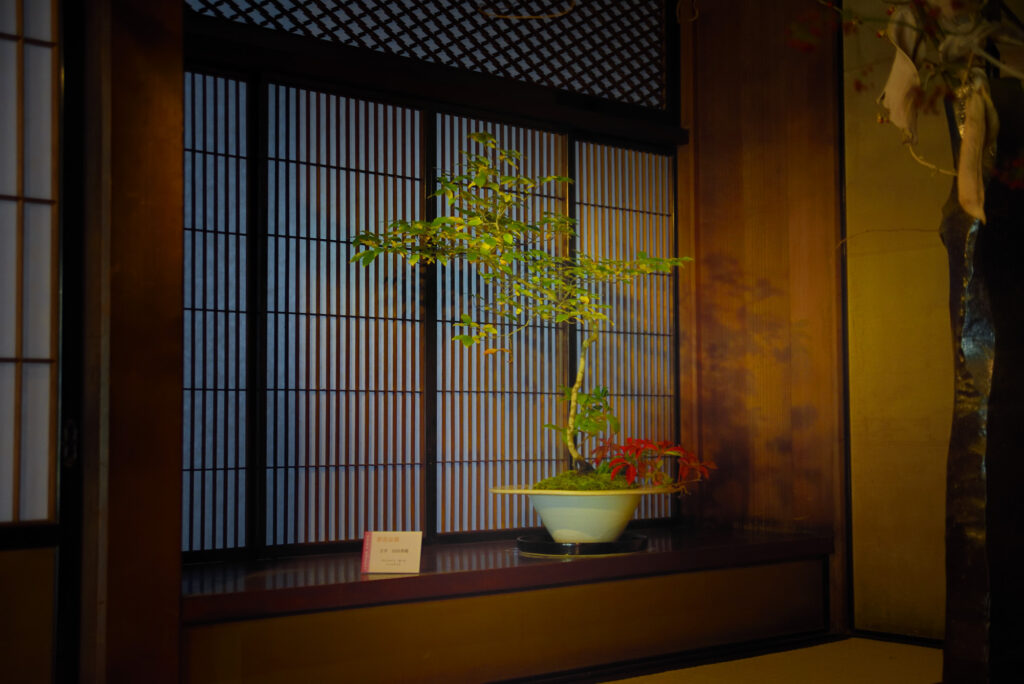
Q.Could you tell us about the difference between traditional bonsai and Saika Bonsai?
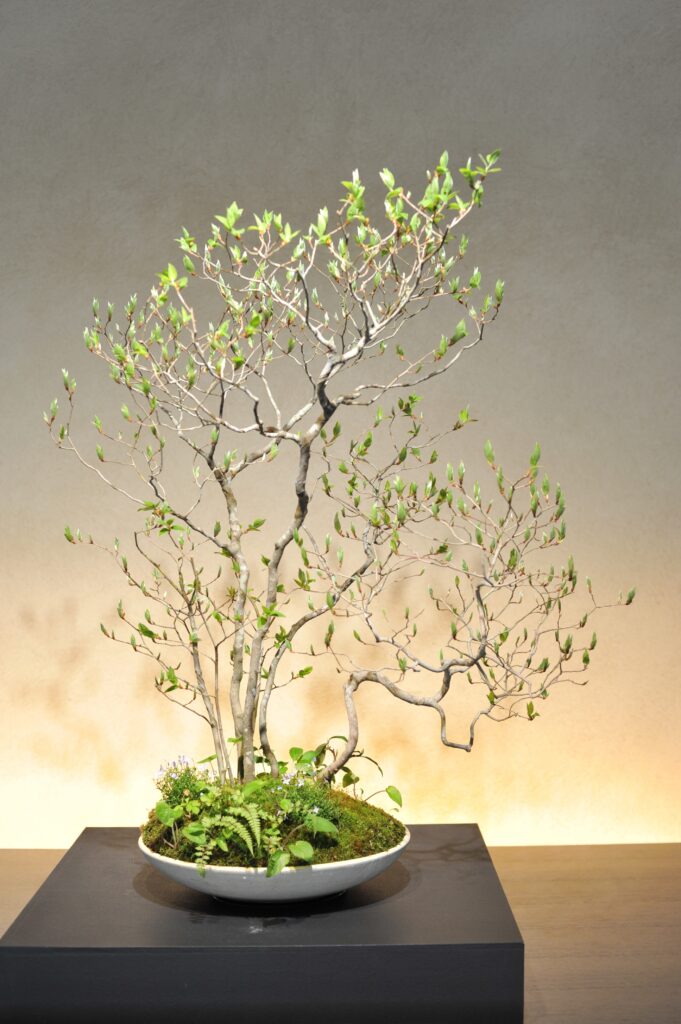
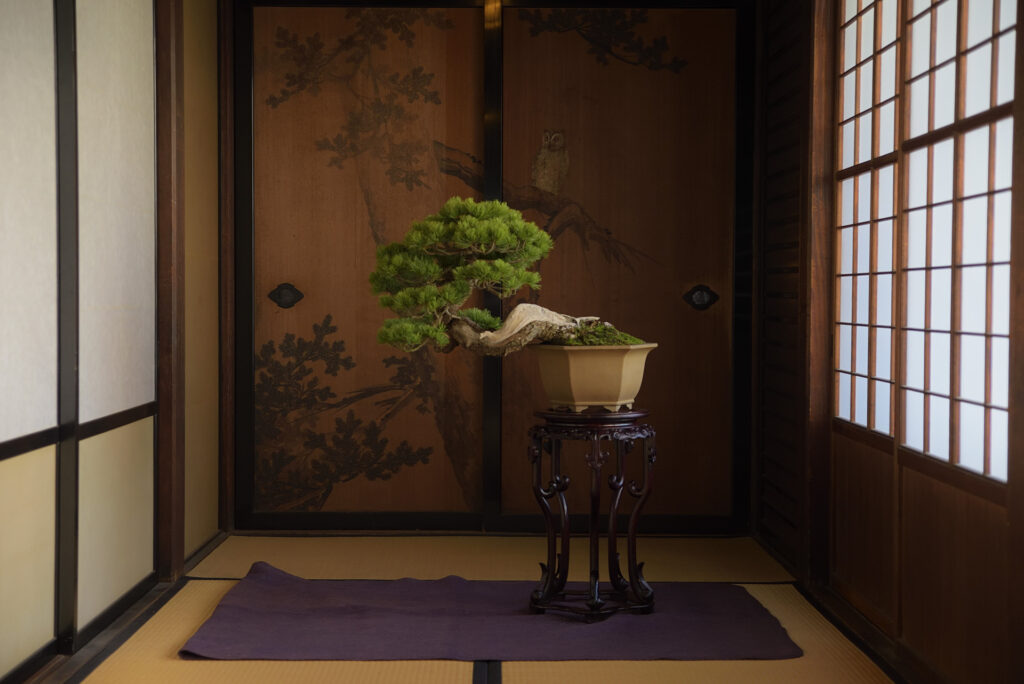
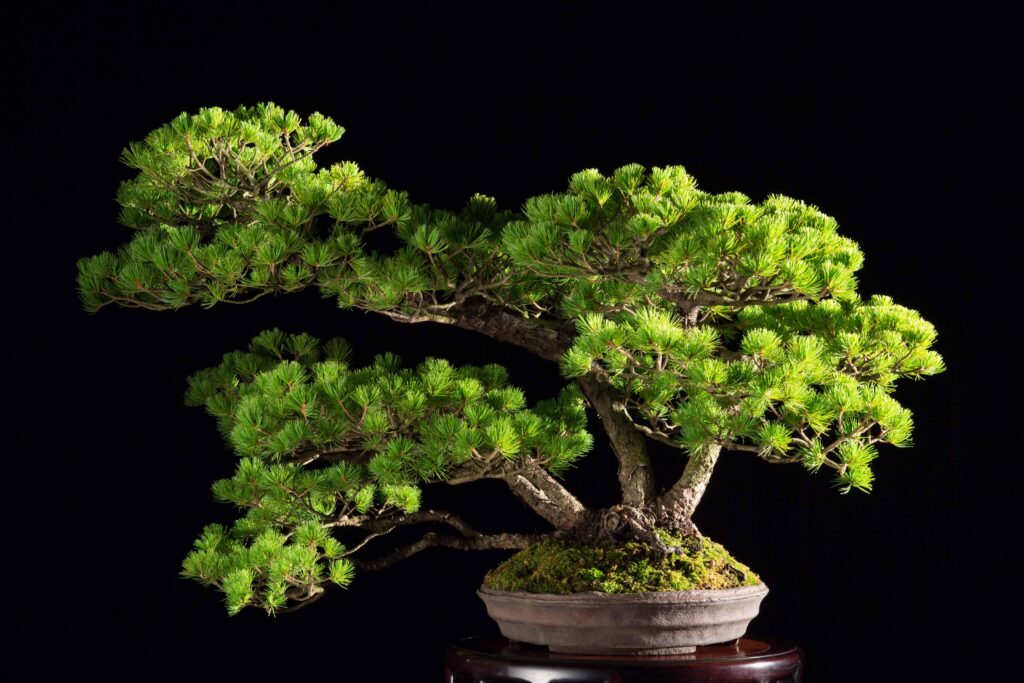
Traditional bonsai expresses nature with a single tree in a single pot. It is a world where the scenery and spirituality of the great outdoors are cultivated over a long period of time. Consequently, it takes time to appreciate the finished form, so in a sense, you are ‘buying time’ when you take it up. On the other hand, with Saika Bonsai, by combining young trees, flowers and wild plants, you can create a landscape within the pot from a relatively early stage. It’s a sense of painting a scene using multiple elements, rather than telling a story with a single tree. If traditional bonsai is a world where one perceives nature through negative space and atmosphere, much like a ink wash painting, then Saika Bonsai is a more concrete and accessible form of expression, akin to creating a miniature garden. I don’t consider one superior to the other; I see it purely as a difference in method of expression.
Q.How does incorporating flowers and plants change the enjoyment of bonsai?
I think it makes it easier to understand that bonsai is a game of the imagination. The difference between bonsai and a potted plant lies in whether there is a scene within the pot. Bonsai is an expression that depicts the wind, light and seasons, and the viewer also lets their imagination run wild, wondering what kind of landscape it might be. However, for example, the pine tree expressed in the traditional ‘one pot, one tree’ style is highly abstract, which can make it difficult for beginners to engage with. In that respect, Saika Bonsai, with the addition of flowers and foliage, makes the scene more concrete, making it easier to visualise a landscape such as a spring meadow. I believe this provides an accessible entry point, particularly for those encountering bonsai for the first time.
Q.Is there anything you are particularly mindful of when introducing bonsai to the younger generation?
What I am most mindful of is using language that is easy to understand. I have been teaching primary school children for many years, and I know that difficult technical terms or abstract explanations simply do not get through to them. That is precisely why I place great importance on concrete words and metaphors. For example, when explaining the process of tidying the roots, I tell them, ‘It’s just like tidying your hair.’ ‘If you pull out a hair, it hurts, and you have to tidy it up nicely, don’t you?’ When I say that, the children understand straight away. It’s the same after pruning branches. If I ask, ‘What would you do if someone got hurt?’, they reply, ‘Put a plaster on it.’ So, I explain that it’s the same for trees: ‘We apply it to protect the wound,’ giving a concrete explanation to help them visualise it.
Q.Indeed, even children can picture that.
Exactly. If you link why we apply it and why we cut it to everyday experiences, bonsai becomes much more accessible. Rather than explaining it in complicated terms, the key is for them to feel, ‘I get it.’ That is what I value most when passing on bonsai to the younger generation.
Q.When teaching bonsai to people from overseas, do you notice any differences compared to Japan?
As the landscapes they’ve seen and the climates they’ve experienced are different, I do feel that their basic sensibilities differ. It is not easy to share the beauty of falling leaves or stillness between a country with four distinct seasons and one where it is always summer. I imagine that even when looking at the same bonsai, the way it is perceived is bound to differ. That is precisely why, when teaching bonsai to people overseas, I often start by conveying the beauty of the art itself—such as the balance of form and composition.
Q.When teaching bonsai to people overseas, is there a core principle that you hold dear?
As for form and technique, there are aspects that are relatively easy to share. However, when it comes to the spiritual approach to appreciation that has been nurtured in Japan—for example, the sense of savouring the changing seasons, the attitude of perceiving negative space, or the aesthetic sensibilities of wabi and sabi—how do we share these with people who have a different cultural background? I haven’t found the answer to that yet. How can I bridge the gap to convey the depth that bonsai possesses? That is a major challenge for me.
Q.Where do you think the strength of bonsai as a part of Japanese culture lies?
I believe the very fact that it was not created overnight, but has been passed down over more than 1,000 years, is its strength. Whilst its form has changed with the times, its essence remains unchanged. People 100 years ago, and I today, stand before a bonsai, watering it, tending to it, projecting our lives onto it, and entrusting it with healing and prayers. That practice remains the same. The accumulation of this long history, passed down like DNA, is the great strength of bonsai as a part of Japanese culture. That is precisely why I believe it is something we must cherish, protect and pass on to the next generation.
Q.What, specifically, do you consider ‘preserving tradition’ to entail?
It means understanding the essence and not compromising that essence. However, I also feel that ‘preserving’ does not simply mean keeping the form unchanged. There is a phrase, ‘Fuyu-ryu-ko’ (the enduring and the changing). It means maintaining a core that must not be altered, whilst presenting it in a form that suits the times. Bonsai is not a daily necessity. Yet it has the power to move people, to give them courage, or to bring them a moment of calm. It is only by touching people’s hearts in this way that its true value is realised. It is not something bought out of necessity, but something sought after because one ‘wants’ it. That is precisely why I believe it is paramount not to lose sight of its essence.
Q.I imagine many of our readers have never had any experience with bonsai. If there is anything you would like to say to those thinking of taking it up, please do share.
Don’t think of bonsai as something difficult; try starting with a Japanese maple or a maple tree. You can clearly feel the changing seasons—from fresh greenery to autumn colours and then the falling of the leaves—and experience the rhythm of nature. Start by keeping one close at hand. And if possible, it’s reassuring to have someone to guide you, whether at a class or a shop. By feeling the seasons throughout the year, your sensitivity to nature will be sharpened. You will come to understand how to care for them in summer and prepare them for winter, and this will lay the foundation for you to take on slightly more challenging species. Maple trees are perfect for that first pot, combining strength, change and beauty. I would be delighted if you would use them as your starting point to step into the world of bonsai.
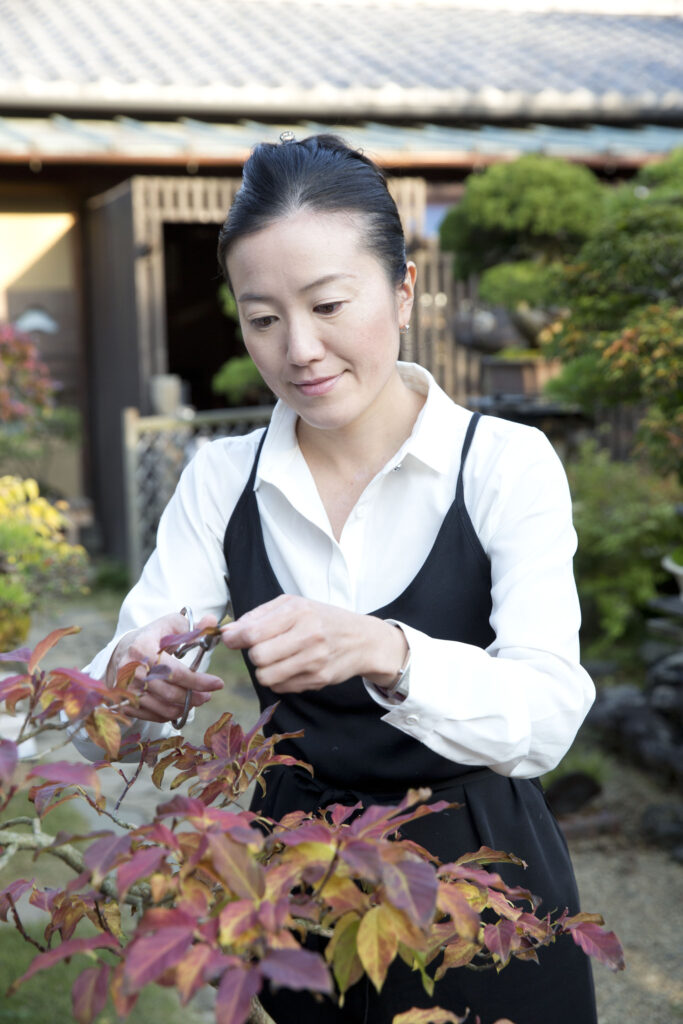
PROFILE
Bonsai Seikouen, Fifth-Generation Head
Kaori Tamada
Born in 1978 in Bonsai-cho, Kita-ku, Saitama City. Bonsai artist. Former presenter of NHK Educational TV (now E-Tele) programme ‘Shumi no Engei’ (Hobby Gardening), she is active in a wide range of fields including television, radio and writing. Acting on her mission as a ‘Bonsai Evangelist’, she is a pioneer in broadening the appeal of bonsai to women and younger generations. The ‘Saika Bonsai’ classes she runs celebrated their 25th anniversary in 2024. Approximately 2,500 people are enrolled in classes held at seven locations, including Seikouen, across Tokyo, Saitama, Kanagawa and Chiba. She is also a Saitama Tourism Ambassador.