
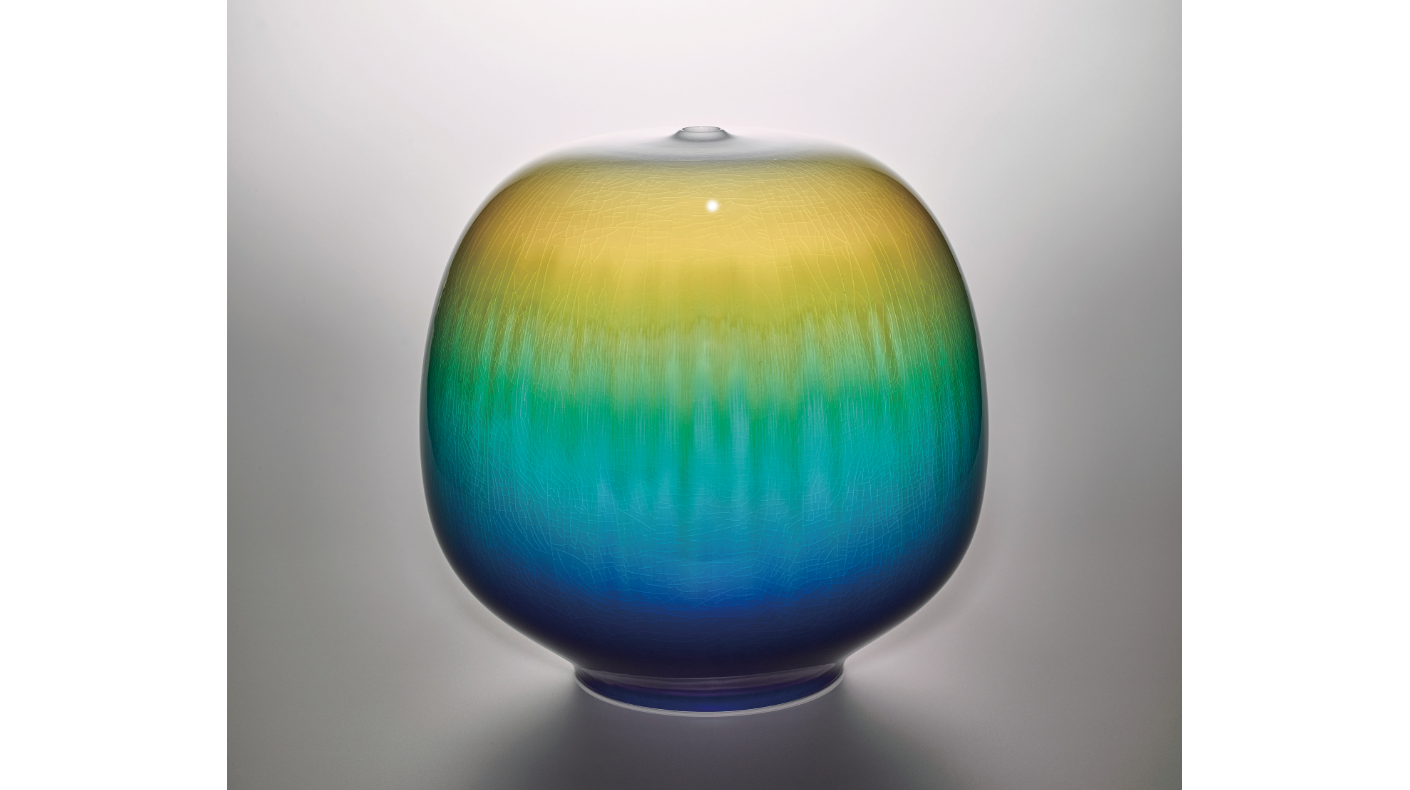
‘Tokuda Yasoichi’ is one of the most renowned names in Kutani ware. Yasoichi Tokuda, the fourth-generation master, has built upon the techniques passed down from his father―a Living National Treasure―to pioneer a new world of colour through his own artistic sensibility. Taking on the family name, the earthquake, a management crisis―having overcome countless hardships and illnesses, what he now sees is a form of tradition that goes beyond merely preserving the past. We spoke to him about the free spirit inherent in Kutani ware and his aspirations for the future.
―Ms Tokuda, you were born and raised into a distinguished Kutani ware family. How do you remember the pottery studio?
As a child, I wasn’t allowed into the workshop. The pottery studio was a sacred place, and with the kilns and tools there, it was dangerous. As the eldest daughter and the first child born into the main family line, I was brought up with great care. Consequently, my freedom of movement was restricted, and I was hardly ever allowed to go anywhere other than the garden. So, as a child, I had plenty of time to play on my own. In summer, I’d ask the live-in craftsmen to ‘catch some cicadas’ for me, and in autumn, I’d gather chestnuts and boil them. Plants and insects were like friends to me.
―When did you first start thinking about taking over the family business?
I think it was around the age of 25. Until then, I hadn’t had any particular interest in the family business. After all, ours was a rather strict household. When I was younger, I longed for a more glamorous world, and the feeling that ‘I want to go somewhere other than here’ was much stronger. That’s why I went to study in the United States after finishing high school, and afterwards I went on to a junior college in Tokyo. But having lived in various places, I realised that freedom isn’t something a place gives you. Ultimately, wherever you are, you have to face yourself. I came to feel that freedom is something that lies within one’s own heart.
―I understand that encountering Jingdezhen coloured porcelain at an art museum in the United States in your mid-twenties was what prompted you to take up pottery.
In my mid-twenties, after working as a news presenter at NHK’s Kanazawa Broadcasting Station, I went to New York and visited the Metropolitan Museum of Art. New York, of course, has its own history and culture. But to me, it all felt somewhat barren. I couldn’t really feel that sense of nostalgia that connects me to my roots. It was against this backdrop that, the moment I saw the coloured porcelain from Jingdezhen, I thought, ‘Ah, how familiar.’ The roots of Kutani ware lie in Chinese porcelain. The colours and textures I’d taken for granted since birth were right there. That experience prompted me to enrol in the summer course at the Ishikawa Prefectural Kutani Ware Technical Training Centre, where I began learning the art of blue-and-white porcelain painting. At first, I had a rather casual attitude, thinking, ‘I’ll just give it a go.’ But once I started, I found it fascinating and threw myself into it wholeheartedly. Before I knew it, I had delved deeply into the world of ceramics. At that time, I still had no intention of taking over the family business. However, I feel as though I was naturally drawn to Kutani ware, as if guided by my own roots.
―How did your resolve to take over the family business take shape?
I graduated from the Ishikawa Prefectural Kutani Ware Technical Training Centre in 1990, and the following year my studio was completed, so I began producing work in earnest. A major turning point came in 2007. My father, Yosokichi Tokuda III, had works exhibited at the ‘Beauty of Japanese Craftsmanship’ exhibition held in London, and I accompanied him. I remember it was a very nerve-wracking trip, as numerous other master craftspeople representing Japan were also taking part. However, that autumn, my father suffered a stroke. As he was in and out of hospital, he began to teach me about the glaze formulations that had been passed down from the first generation. At the time, thinking, ‘This might be my last chance,’ I listened intently. In 2008, my work *Sarasa-mon Bowl* was selected for the 55th Japan Traditional Crafts Exhibition for the first time. The following year, in 2009, I was selected once again for the 56th Japan Traditional Crafts Exhibition with *Haruka*, which utilised the ‘Yasokichi colours’. When I told my father, who was on his sickbed, he repeatedly expressed his delight, saying, ‘Congratulations, congratulations, that’s marvellous.’ After offering those first and last words of praise, my father passed away shortly afterwards. Even at that point, however, I had no intention of taking over the family business. I thought that once the third anniversary of his death had passed, the matter would simply fade away naturally. That was my thinking. However, one day, I received a phone call from my ikebana teacher, who had always looked after me. ‘You’ve been practising pottery for twenty years now; why not take over the family business?’ she said, giving me a gentle nudge. When I heard those words, I thought, ‘In that case, perhaps I should take on the name.’
――In 2010, you assumed the name of the fourth-generation Tokuda Yasoichi.
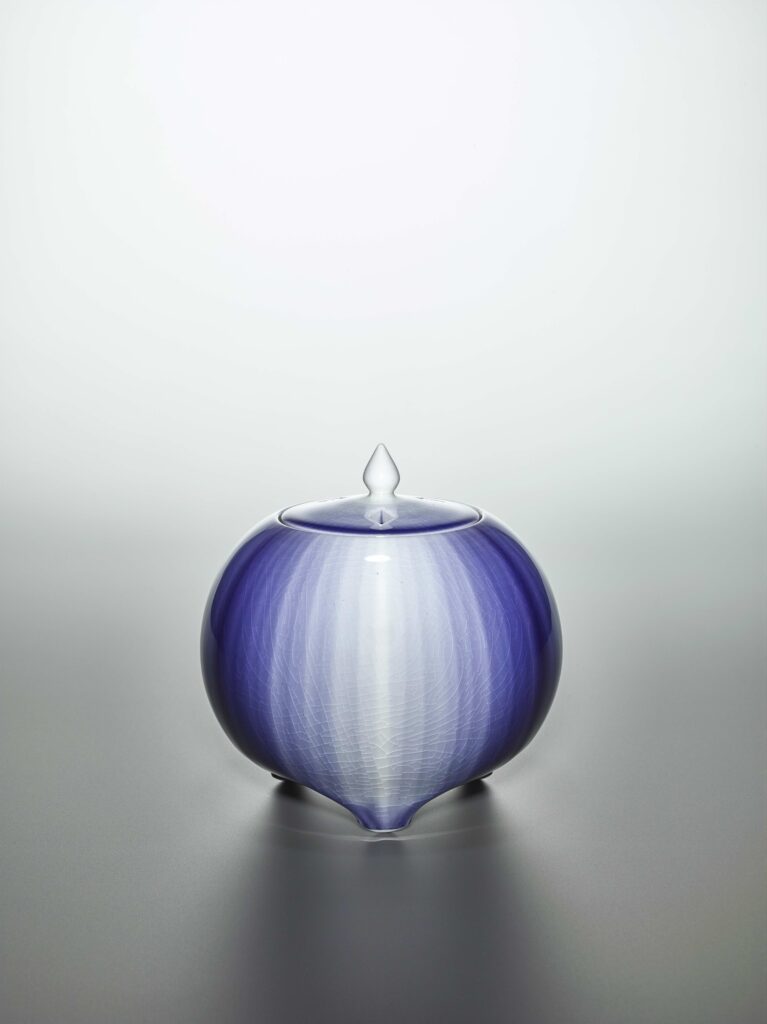
On the day I assumed the name, I changed my legal name from Junko to Yasoichi. Afterwards, I underwent a purification ritual at a Shinto shrine and headed to the Nishiki Kiln Exhibition Hall. To my surprise, there were lots of newspaper reporters waiting there. It was only then that I truly realised, ‘Assuming this name is such a momentous occasion.’ Until then, I’d simply felt like just another artist pursuing my own path in pottery. But from the moment I took on the name, I found myself in a position where I was shouldering the history of the Tokuda family and the workshop itself. To be honest, I thought it was quite a heavy name to bear.
―So, after taking on the name, you found yourself shouldering responsibilities not only as an artist but also as a business owner.
That’s right. Furthermore, in 2011, the Great East Japan Earthquake struck. Whilst society as a whole was gripped by anxiety, it came to light that we were facing debts of over 300 million yen, including loans and taxes left by my father. It was also a crucial period as I was aiming to become a full member of the Japan Traditional Crafts Exhibition; I had reached a milestone where I would become a full member if I were selected for the fourth time. However, I was not selected. It felt as though nothing was going right, and at one point I told the craftsmen, ‘I’m thinking of giving up.’ But they all looked so sad. It was then that I realised what my father had entrusted to me was not the workshop or the buildings, but the craftsmen working here and their families. Whilst it is possible to preserve land and buildings, safeguarding people’s livelihoods and lives is no easy task. I think it was only then that I truly understood what my father meant when he said, ‘I’m counting on you.’ Those days felt like groping my way through a pitch-black thicket where I could see no future. Yet, it was precisely because of that period that I developed my own resolve, and I believe my artistic style as the fourth-generation artisan has gradually taken shape. Now, I feel that I will continue walking this path until the day I die. I want to do my very best, whilst cherishing each and every day.
―The works of the Tokuda family are, indeed, striking for their ‘colour’. Is there a particular colour that you hold dear?
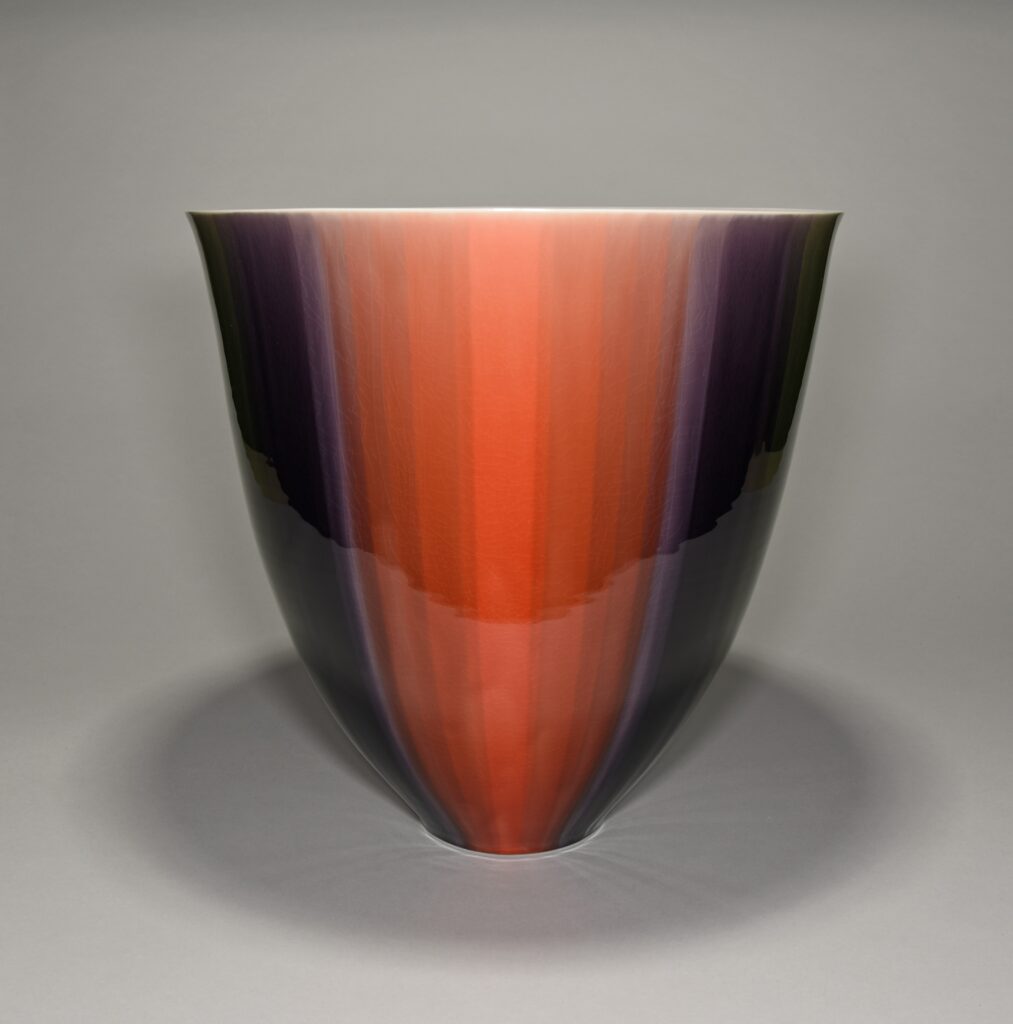
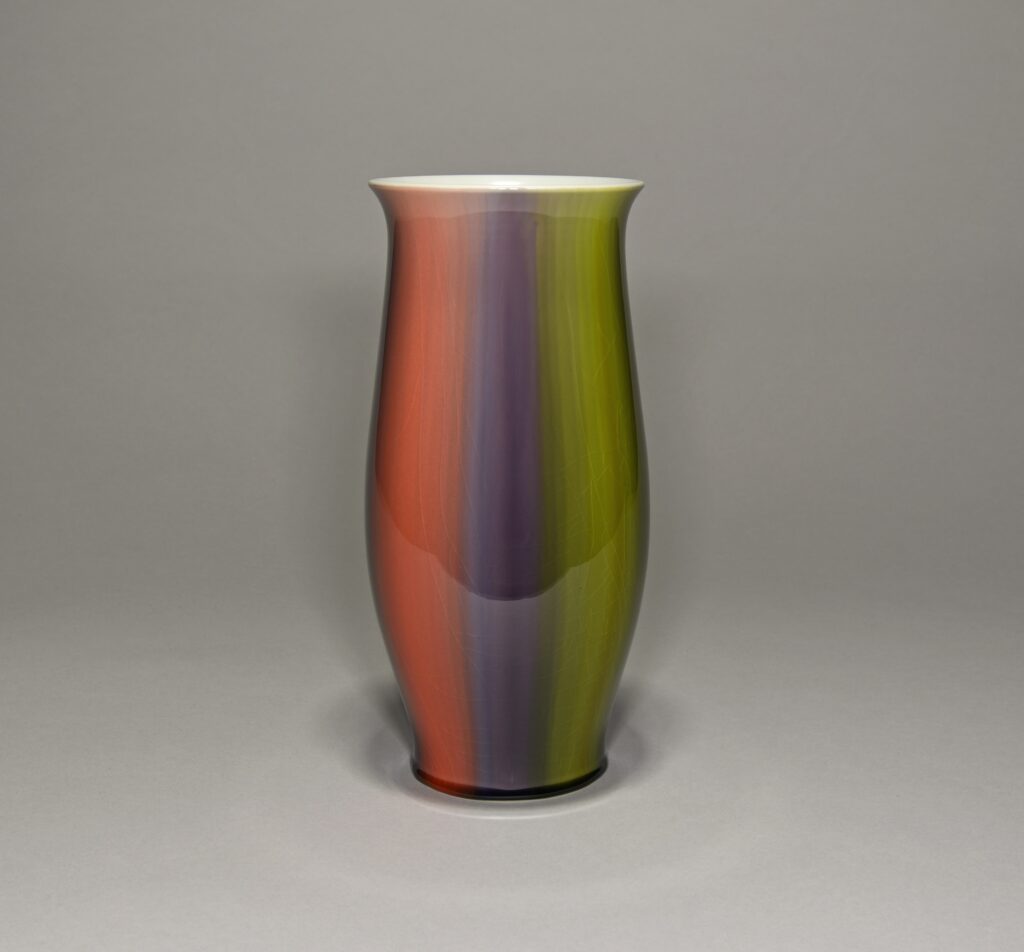
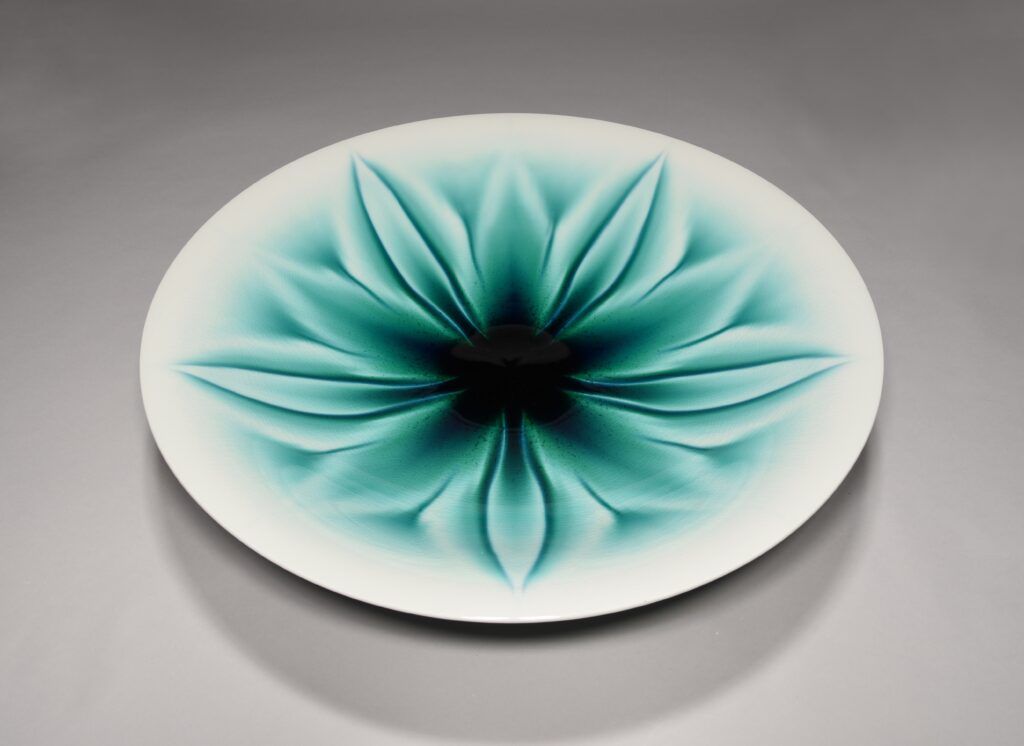
I consciously use red, a colour my father did not use. Red is the colour of blood; for women, it is also the colour of menstruation; I believe it is a colour deeply connected to the life force. Indeed, wearing red clothes or lipstick can sometimes lift one’s spirits, can’t it? I, too, feel that red possesses that kind of energy. However, red isn’t the only colour that brings my works to life. A blue sky stretches out before my studio, the mountains are lush with greenery, and in autumn, golden rice ears sway in the breeze. I draw strength from these natural colours every day. I’d be delighted if that strength were to flow through my hands into my works and touch the hearts of those who hold them. It might sound a bit grandiose to say ‘giving the strength to live’, but I believe that if my work can help people feel even a little more positive, then there is meaning in my creating it.
―Having spent so many years working with colour, has the way you see the world changed?
When my father was teaching me about colour, he once lined up a row of blue pieces and said, ‘They must all look the same to you, don’t they?’ At the time, they really did all look the same to me. But now, I can tell which glaze number each one is. I believe that colour is something you learn not just through knowledge, but by taking the time to absorb it with your whole being. As you keep looking at them every day, the range of colours you can perceive gradually expands.
―If you had to name a work that left a particularly deep impression on you, which one would it be?
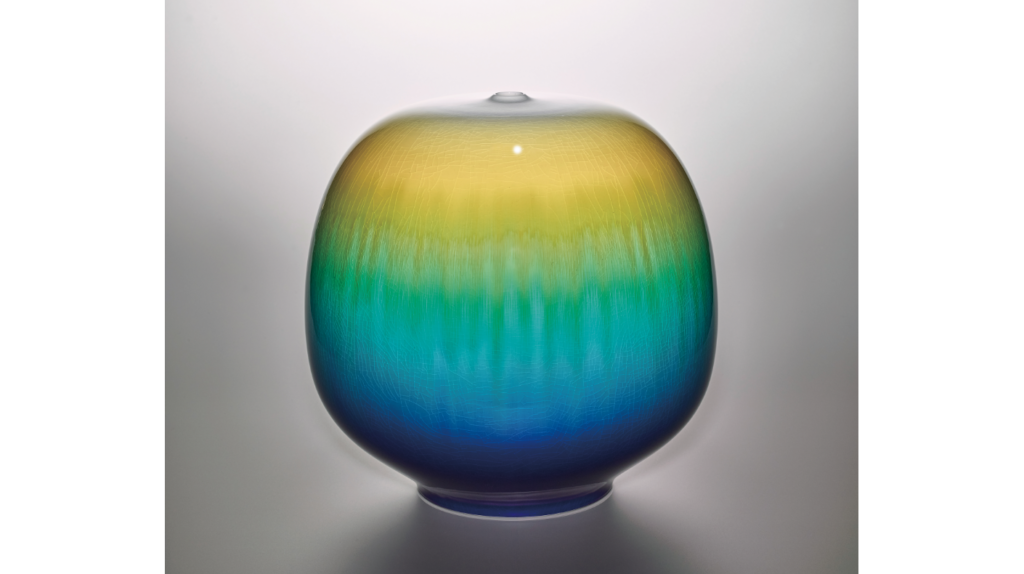
It would have to be *Mizuho*, which I created in 2011. As I mentioned earlier, that was a truly difficult time for me. The Great East Japan Earthquake had struck, and the issue of the debts my father had left behind had come to light. On top of that, my entry had been rejected from the Japan Traditional Crafts Exhibition. I had lost confidence both as a business owner and as an artist, and it was around that time that I was thinking, ‘Perhaps I should just give it all up.’ It was one evening like that, when I was returning home from the gym. It was raining, and when I happened to glance at the rice paddies, the ears of rice were glistening, wet with rain. The sight was truly beautiful. I was feeling down, but the rice plants before me were silently bearing fruit. Thinking of the people in Tohoku suffering in the aftermath of the earthquake, I felt a natural urge to carry on. ‘Even when times are hard,’ I thought, ‘I shall live my life just like this single grain of rice.’ Wanting to capture the radiance of those rice ears I’d seen that day, I expressed the colours shifting from deep green to golden yellow on the pot.
―So this is a special piece for you, Ms Tokuda, one that coincides with a turning point in your life. Does the local environment of Ishikawa have any influence on your work?
I believe that, looking across the whole country, there are few places as bountiful as Ishikawa. Snow falls, fresh greenery sprouts in spring, rivers flow, and rice paddies stretch out. A rich ecosystem thrives here, home to a variety of creatures such as fish, catfish, turtles, ducks and carp. I have lived in this region for a long time, and the older I get, the more I realise the value of this blessed environment. The Goya River flows behind my studio. The river and the rural landscape, which change their appearance with the passing of the seasons, are a vital source of inspiration for me. Ever since I was a child, I have looked up to the literati of China’s Tang dynasty. I was deeply drawn to the stories of poets who lived by the riverbanks, creating their works whilst communing with nature. That is why, when building my studio, I was adamant that ‘it should be a place with a river and a view of the mountains’. My father bought me three rice paddies, and I subsequently acquired more land, so it is now a spacious site. Although it is hard work to maintain, I absolutely love mowing the grass. When the rainy season arrives, the grass grows vigorously and the place turns into a jungle in the blink of an eye, so I get completely absorbed in mowing it. Spending time in nature like this allows me to feel the changing seasons and the very breath of the land with my whole body.
―In recent years, you also experienced the Noto Peninsula earthquake.
Experiencing the earthquake made me take a fresh look at the nature around me. After the earthquake, looking at the greenery spreading out around my workshop, I felt strongly that ‘this landscape really is precious’. Since then, I have also begun creating works based on shades of green and ultramarine. The piece that was selected for this year’s Ishikawa Traditional Crafts Exhibition was also based on these colours. Whilst the shape is a soft form reminiscent of a woman’s dress or décolletage, a single red river flows through its centre. In my mind, that river is also the River Sanzu. Life and death, past and future, parting and rebirth. I feel that the landscapes and emotions I’ve come to see precisely because I experienced the earthquake have gradually begun to emerge in my work.
―Ms Tokuda, how do you view tradition?
I believe tradition is like a flowing river. Water flows ceaselessly through a river, yet that water is never the same. Even if its appearance remains unchanged, its contents are constantly being renewed. Tradition is the same: whilst its essence is passed down, I believe it continues to change with the times. This way of thinking is also reflected in the aims of the Traditional Crafts Exhibition. Preserving what remains unchanged, whilst at the same time continuing to change. Is that not the very nature of tradition? Take Japanese attire, for example. In the past, the kimono was the norm, and going further back in time, the ju-ni-hitoe was worn at court. Yet today, we wear Western-style clothing. Civilisation and ways of life change with the times. However, the culture and spirit that underpin them are passed down. I believe the same applies to crafts. When I was studying at the training centre, I once heard that ‘in America, some people use Buddhist altars as cabinets’. Uses and values change depending on the country and the era. Kutani ware, too, has developed whilst being passed down from Old Kutani through Yoshidaya, Wakasugi and Shōzō. And today, many artists are pursuing their own unique forms of expression.
―As Tokuda Yasoichi IV, what kind of future do you envisage for yourself?
There are craftsmen around me who have been working in the workshop since I was a child. These craftsmen belong to a generation that, if anything, has cherished traditional methods of craftsmanship. On the other hand, I am the sort of person who is interested in new things. I am also keen on sharing information via platforms such as LINE and YouTube. I believe that to survive in these changing times, we must continue to take on new challenges. I often say, ‘The craftsmen are the earth, and I am the wind.’ Earth alone is not enough, nor is wind alone. Just as the term ‘fudo’ (land and climate) suggests, it is only when both are present that something new is born. I see my role as looking out at the wider world, taking in new information, and linking it to the skills and experience cultivated by the craftsmen.
―What role do you think craft plays in modern society?
I believe craft has the power to reawaken senses that people are in danger of forgetting. AI and digital technology are currently developing at a rapid pace. Whilst this has brought convenience, I believe we are also entering an era in which we are re-examining the value of creating things by hand. Craft is a very primal activity. Touching clay, working with fire, and taking time to shape something into form―this process encapsulates the very essence of what it means to be human. That is precisely why I believe that understanding craft is not merely about appreciating objects, but also leads to an understanding of a country’s culture, history and the values of its people.
――People’s lifestyles have changed significantly over time, haven’t they?
That’s true. In the past, extended families were the norm, and memorial services and weddings were held at home. But now, with the rise of the nuclear family, the roles expected of tableware are also changing. That is precisely why I believe we need to think flexibly about the nature of craftsmanship. For example, there are people who would like to host a tea ceremony but find it difficult to own all the expensive utensils themselves. In that case, it might be a good idea for us to lend out the pieces we have. Craft is also about bringing people together, sharing time and creating enriching experiences. That is why I wish to explore the potential of craft suited to the new era, whilst preserving tradition. And I always tell the artisans this: pottery is not merely an ‘object’. It embodies the maker’s thoughts, time, skill and soul. I believe it is this accumulation that constitutes the value and brand of the name ‘Yasokichi Tokuda’.
PROFILE
Kutani-yaki Artist
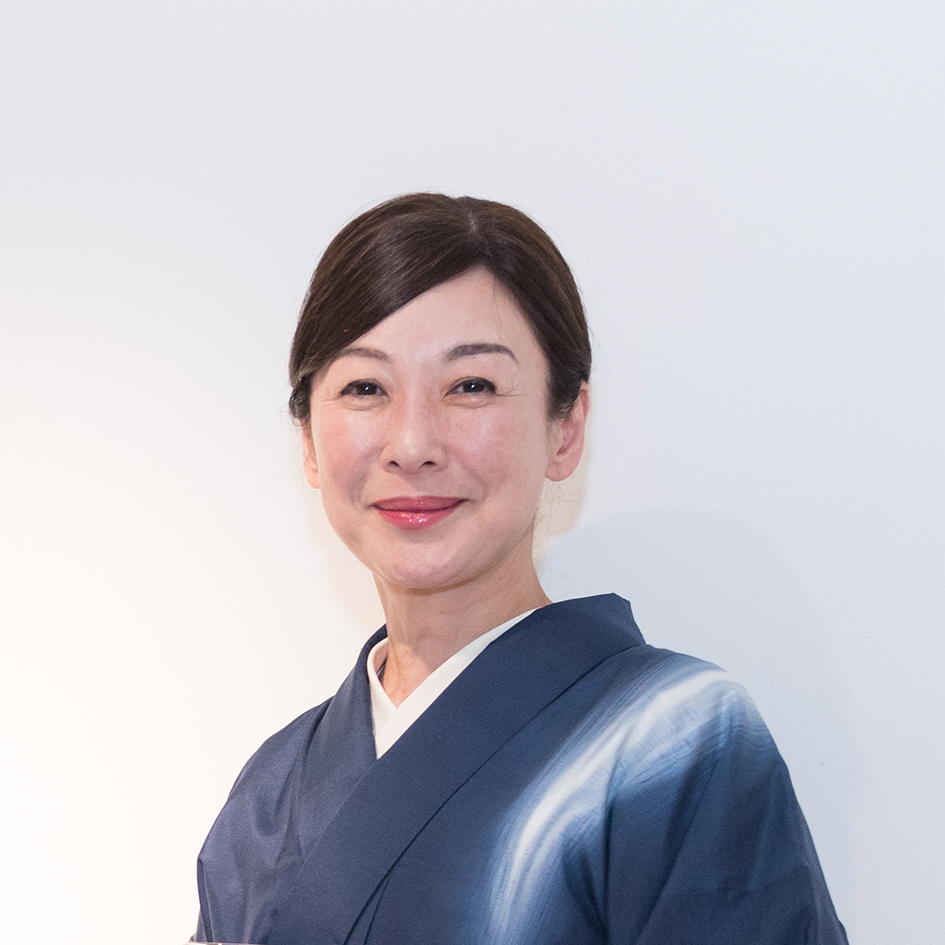
Yasokichi Tokuda, 4th Generation
Born in 1961 in Komatsu City, Ishikawa Prefecture. She was born as the eldest daughter of Yasokichi Tokuda, the 3rd Generation, who was designated a Living National Treasure. After working as a presenter at NHK Kanazawa Broadcasting Station, she embarked on a career in pottery and, in 2010, became the first woman to succeed to the name ‘Yasokichi Tokuda, 4th Generation’. Whilst upholding the secret ‘Sai-yu’ glazing technique of Kutani ware, passed down through generations, she infuses her work with a supple sensibility unique to a woman, creating soft and elegant colour gradients. She is pioneering a modern and beautiful artistic world that transcends the boundaries of tradition. She has received numerous awards and been selected for exhibitions in Japan, including the Japan Traditional Crafts Exhibition. She is one of the leading figures in the contemporary Kutani ware world, active at the forefront of the field.